Funded by their community · Hendersonville, TN
How 30 investors backed BareSöl Spice Co's next chapter
A Hendersonville seasoning brand built around the dinner table, funded by the people who already cook with it
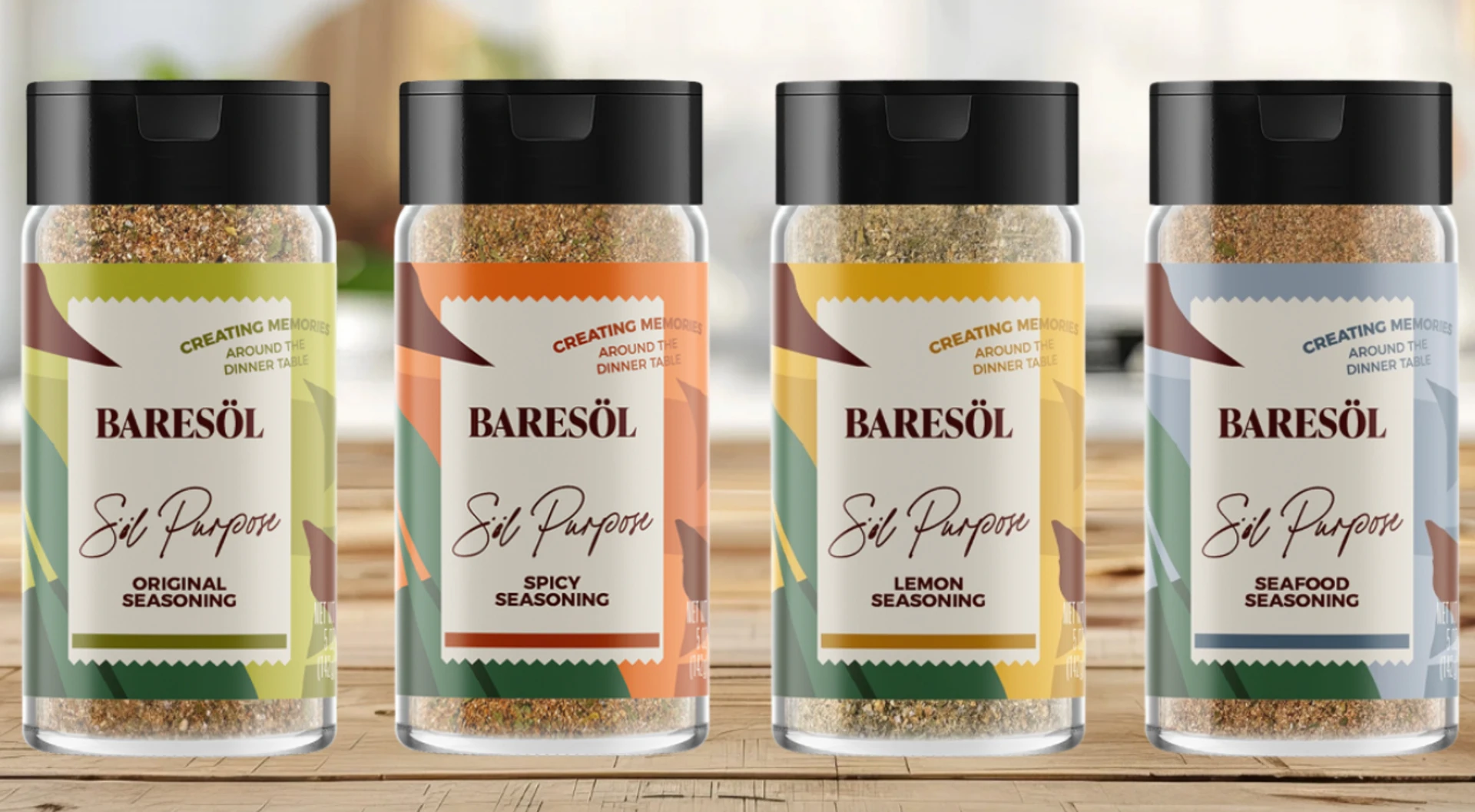
Four blends, one table
BareSöl Spice Co. sells four seasoning blends — Original, Spicy, Lemon, and Seafood — out of Hendersonville, Tennessee. The blends sit in customers’ cabinets next to the salt and pepper. They go on chicken thighs on a Tuesday, on the seafood boil on a Saturday, on the vegetables that needed something to wake them up. The brand is built on a specific idea: that a seasoning is the thing that gets a family back to the dinner table together, and that the seasoning ought to taste like somewhere.
The somewhere, in BareSöl’s case, is traditional Black cuisine — the cooking the founder grew up around, reworked for a kitchen that also cares about how much sodium is in the jar. The blends are lower-sodium and contain no fillers, which is a real ingredient choice in a category where filler is the default and sodium does most of the work. Pulling those out and still delivering the depth the cuisine calls for is the technical problem the brand is solving on the spice rack.
BareSöl sells direct to consumer through its website, at community markets across Middle Tennessee, and through a subscription program for the customers who go through a jar a month. It works with a co-packer rather than running its own production line, which is the right call at this scale — the founder’s time goes into the blends, the brand, and the markets, not into running a kitchen.
The constraint, by early 2026, was the one most CPG founders hit a year or two in. The brand had a customer base, a real product line, and a steady cadence of community-market weekends. What it didn’t have was the inventory cushion to say yes to a wholesale account that wanted a hundred jars next month, or the booth setup that turns a market table into something a buyer walking past actually stops at. Growth was waiting on capital that operating cash flow couldn’t free up fast enough.
Why a community-funded raise fit
A traditional small-business loan was a hard fit for the same reason it usually is at this stage: a young CPG brand’s books read like a young CPG brand’s books, and most banks aren’t underwriting against a co-packer relationship and a market schedule. Equity would have meant trading permanent ownership for capital the business needed for inventory and a booth — a lopsided trade.
Honeycomb Credit’s structure matched the shape of the business. A fixed-rate, fixed-term community-funded loan lets BareSöl raise from the same people who already buy the blends, keep the company whole, and pay the capital back over the life of the loan. The investors are the customers, which is the part of the structure that does the most work for a brand at this stage. A jar of Original on someone’s counter is one customer; that same customer with a small financial stake in the company is a household that mentions the brand to a friend, asks the local grocer if they carry it, and shows up at the next market.
The raise
BareSöl’s campaign opened on March 24, 2026 and closed on April 23, 2026. Thirty investors funded the raise, putting in $12,974 against a $25,000 ceiling.
The raise closed under its target ceiling but past the funding minimum that lets a Honeycomb loan close. Honeycomb campaigns are all-or-nothing above that minimum, which means the capital came through and the loan funded. Thirty investors is a smaller circle than some campaigns close with, and the honest read on that is what it almost always is for a brand at this stage: the customer base is real but still building, and the people who funded the raise are the early core of it rather than a long tail.
That early core is the asset. A seasoning brand grows the way seasoning brands have always grown — someone cooks with it, someone else tastes the food, the jar gets passed around. Thirty households with a direct stake in BareSöl’s next twelve months is thirty households with a reason to be the one who passes the jar.
What the funds do
The capital goes to three places the founder named in the offering. A professional vendor booth replaces the table-and-tent setup at community markets, which matters more than it sounds — a booth is the difference between a shopper glancing past and a shopper stopping. Inventory expansion through the co-packer means BareSöl can hold enough stock to take a wholesale order without the conversation ending on lead time. And targeted marketing puts paid weight behind the channels that have so far grown on word of mouth alone.
None of those line items are exotic. They are the unglamorous infrastructure a CPG brand needs to convert the demand it already has into the revenue it should be capturing. The booth pays for itself in market weekends. The inventory pays for itself the first time a buyer says yes. The marketing is the lever that makes the first two work harder.
The longer arc, in the founder’s telling, is a lifestyle brand — kitchen accessories, cookware, shelf-stable products that extend the dinner-table idea past the spice rack. That’s a five-year conversation, not a 2026 one. The 2026 work is the one in front of the brand: more market weekends, the wholesale conversations the inventory now supports, and the four jars on more counters than they were on in March.
Your turn
Could your business raise like this?
Honeycomb Credit helps small businesses raise capital from the people who already love them. If that sounds like a fit, we’ll walk you through whether your business qualifies.