Funded by their community · Hillsborough, NH
How a New Hampshire BBQ sauce maker raised $23K from 48 backers
A Hillsborough sauce and seasoning company funded by the people who already cook with it
From a Hillsborough kitchen to retail shelves
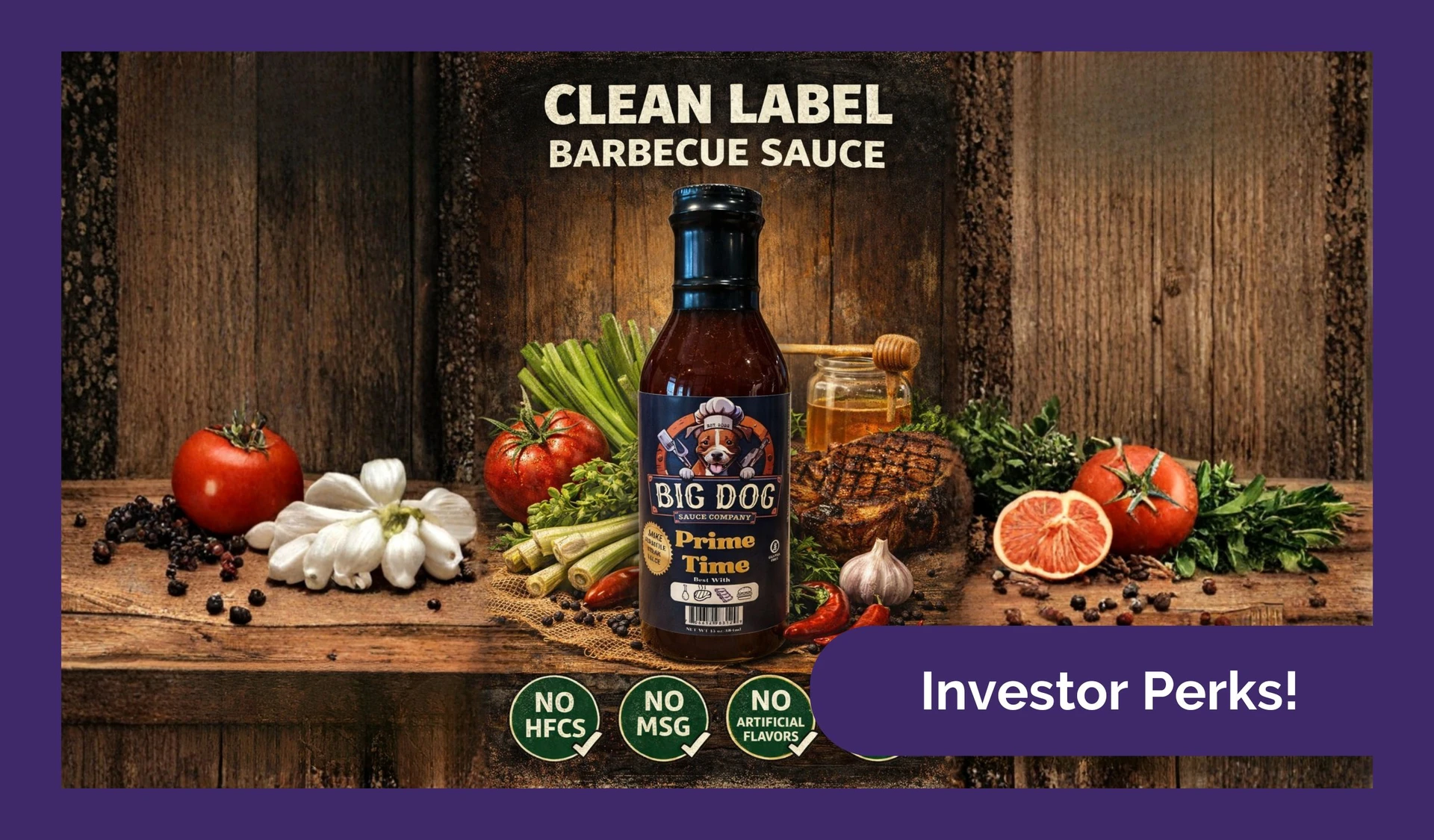
Open a jar of Big Dog Sauce Company BBQ sauce on a Saturday afternoon, pour it over ribs already on the grill, and the smell does most of the work before anyone tastes anything. The sauces are made in Hillsborough, New Hampshire, by a small team that built the line around a simple constraint: no artificial flavors, no artificial colors, no preservatives. The constraint shows up in the ingredient label and in the price of every batch.
Big Dog Sauce Company is a premium sauce and seasoning maker. The product line is built for home cooks, grill masters, and the kind of customer who reads the back of the jar before buying. The business has spent its first chapters building a retail footprint and a wholesale program, with sauces and seasonings developed one recipe at a time. Each formulation is meant to hold up next to whatever is already on the stove or the grill.
The thing about a clean-label sauce business is that scaling it costs money in places a customer never sees. Ingredients without preservatives have shorter shelf lives and tighter sourcing windows. Production runs cost more per unit at small batch sizes than at industrial scale. Retail partners want consistent inventory and pricing, which means producing ahead of demand rather than after it. The capital question is not whether to grow. It is how to fund the working capital that growth requires before the revenue arrives to fund itself.
A traditional small-business loan was not the right instrument for a young CPG brand whose books read like a young CPG brand’s books. The owner wanted to keep the company whole and keep the recipes in-house. Equity would have meant trading ownership for capital permanently. A bank loan would have meant a personal guarantee on a balance sheet that was still being built.
Why a community raise fit
Honeycomb Credit lets a small business raise capital from the people who already buy the product, as a fixed-rate, fixed-term community-funded loan. The business keeps 100 percent of its equity. The community that funds the raise gets paid back with interest over the life of the loan. For a brand like Big Dog Sauce Company, the structure matches how a CPG business actually grows. People who try the sauce and like it tend to tell other people. Some of those people end up at a tasting demo. Some end up asking their local grocer to stock the line.
Turning the people most likely to advocate for the brand into investors gives them a direct stake in seeing it succeed. That kind of advocacy is hard to buy and easy to underestimate. A bank loan does not come with it. An equity round from an outside investor does not come with it either.
Forty-eight backers, $23,782 raised
Big Dog Sauce Company’s campaign opened on November 24, 2025 and closed on January 9, 2026 with $23,782 raised from 48 investors. The raise did not reach the $50,000 ceiling, but it cleared the threshold that lets a Honeycomb loan close, which means the capital was issued and the work the funds were raised for is now underway.
Forty-eight investors is a meaningful number for a brand at this scale. It is forty-eight households that now have a small stake in whether the sauces show up on more shelves over the next year, and forty-eight names the business can call on when the next product launch needs early buyers. For a CPG brand whose growth depends on people trying the product and telling other people, that is the asset the structure creates.
The raise also did the thing community-funded debt does best for an early-stage CPG business: it brought in working capital without giving up ownership and without putting the recipes on someone else’s balance sheet. The owner did not name a specific bank in the campaign materials, but the structural fit between the business and the financing instrument is clear from the use of proceeds.
The capital is going to four places. Inventory takes the largest share, which is the working-capital problem at the heart of a growing CPG business: produce ahead of demand, hold the stock, ship it as retail partners reorder. A second allocation funds the launch of a freeze-dried sauce product line aimed at campers, hikers, and the on-the-go customer. A third goes to marketing, including a Walmart.com campaign meant to lift national visibility. The remainder covers operating expenses.
The freeze-dried line is the most interesting bet in the use of proceeds. It opens a category the wet-sauce business cannot serve, with a customer who is already buying flavor-forward food for the trail. If the freeze-dried product lands, the brand has a second product line that travels well, ships cheaply, and reaches a customer who would never carry a glass jar.
The wholesale program continues. The retail relationships continue. The 48 investors are out there.
Your turn
Could your business raise like this?
Honeycomb Credit helps small businesses raise capital from the people who already love them. If that sounds like a fit, we’ll walk you through whether your business qualifies.