Funded by their community · Grand Rapids, MI
The Candied Yam closed at 29 percent of goal — and the loan still funded
A nine-year-old Southern restaurant in Grand Rapids cleared its funding minimum with 34 investors
Nine years of scratch-made Southern food in Grand Rapids
Jessica Ann Tyson has been running The Candied Yam in Grand Rapids since 2017. Nine years of scratch-made Southern cooking, no preservatives, family recipes scaled into a working restaurant kitchen. Two locations now, plus a catering division and an events operation that has turned the business into something broader than a dine-in restaurant.
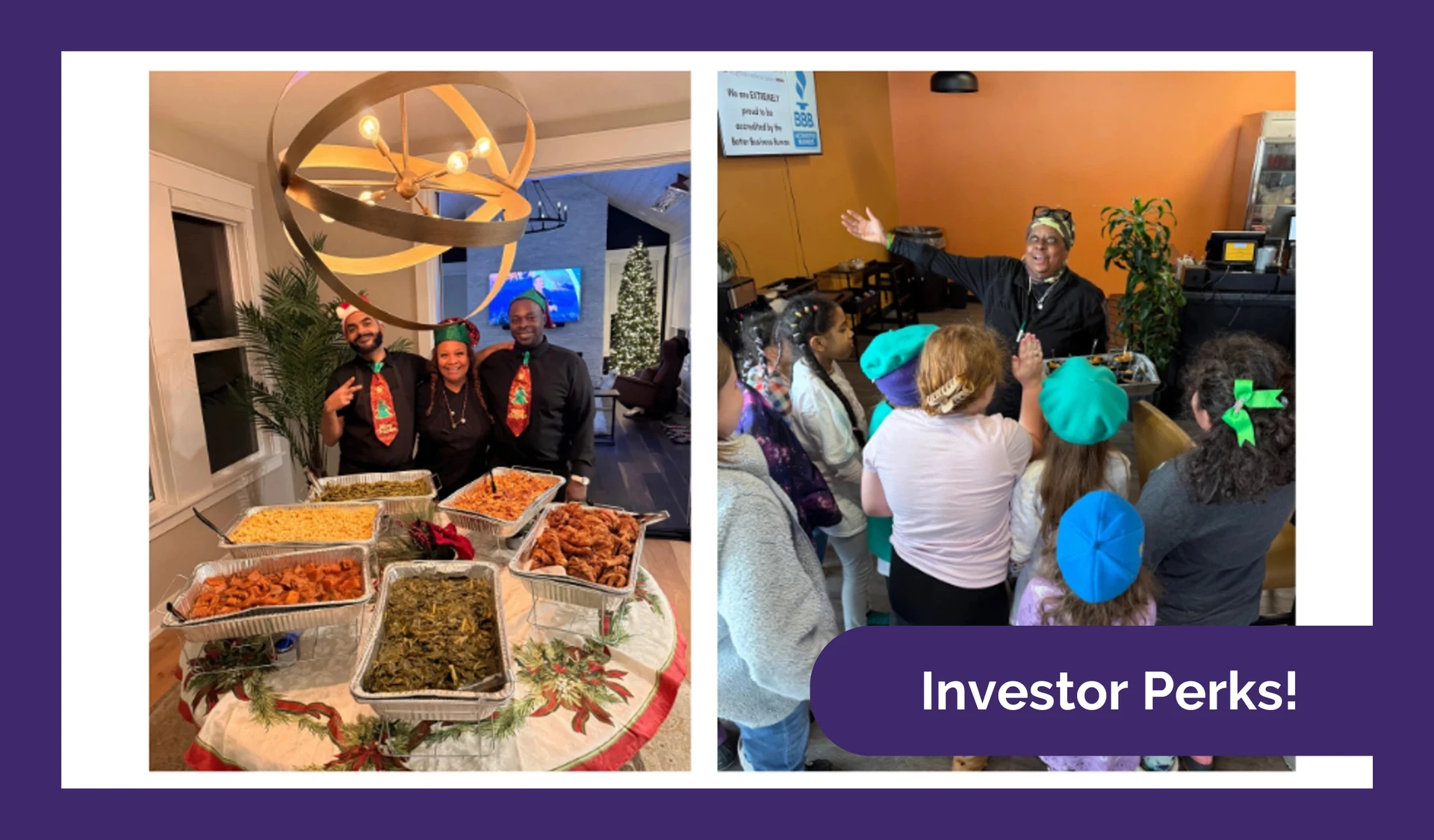
The Candied Yam is what most people would still call a restaurant, but the revenue mix tells a different story. Dine-in and takeout are one channel. Corporate and private catering is another. Venue-based events are a third. The diversification matters because it is the reason a nine-year-old independent restaurant in Michigan is still here at all — restaurants close at rates that would be considered a public health crisis in any other industry, and most of the ones that survive past year three look more like The Candied Yam than like a single-location dining room. Multiple channels, scratch-made standards, an owner who is in the building.
The growth question Jessica was facing is the one most independent operators hit somewhere around year seven or eight. The kitchen equipment is older than the menu items it is producing. The point-of-sale system reports what got sold yesterday but cannot tell the owner what the food cost was on a Tuesday in February. Catering demand exists at a volume the current kitchen capacity cannot reliably meet. The interior of the dining room has nine years of guests on it. None of that is a crisis on any given day. All of it, together, is the ceiling.
The input doesn’t name a specific bank Jessica approached, but the structural mismatch was clear from the business profile. A nine-year-old independent restaurant with three revenue streams and an owner-operator at the center is exactly the kind of business commercial lenders treat as a category problem rather than an underwriting question. Restaurant default rates drive the policy regardless of how the individual business is performing. For an owner who has spent nine years building something that works, equity was not on the table either. The Candied Yam is Jessica’s. It was built to stay that way.
Why a community-funded loan fit
Honeycomb Credit lets a business raise capital from the people who already know it, structured as a fixed-rate, fixed-term community-funded loan. The owner keeps 100 percent of the equity. The investors are paid back with interest over the life of the loan. For a brand like The Candied Yam, where the customer base includes nine years of regulars, catering clients, and event attendees who already know the food, the structure matched the business.
The counterfactual is what makes the choice clear. A bank loan, if one had been available on terms a restaurant could actually carry, would have come with a personal guarantee that puts the owner’s assets behind the business in a way Jessica had spent nine years not doing. An equity raise would have permanently changed who owned The Candied Yam. A merchant cash advance, the option most restaurants end up with when banks pass, would have taken a percentage off the top of every transaction at rates that make scratch-made margins impossible to defend. A community loan from people who eat at the restaurant is a different shape of capital.
What the campaign actually did
The campaign opened on March 5, 2026 and closed on April 15. The raise closed at $14,406 from 34 investors against a $50,000 ceiling — short of the goal, but past the funding minimum that lets a Honeycomb loan close. Reg CF raises are all-or-nothing above the minimum, and the discerning reader knows what 29 percent of a stated goal means: the campaign cleared the bar that mattered, and did not clear the one above it.
That is a real outcome to sit with. Thirty-four investors is a smaller circle than a nine-year-old restaurant with two locations might have hoped for, and the dollar figure funds a narrower version of the equipment and technology plan than the full $50,000 would have. Jessica gets a working loan from 34 people who chose to back the business, on terms that keep The Candied Yam whole. The plan that gets executed is the plan the capital actually supports.
The structure is also the bet on what comes next. Thirty-four investors who already eat at The Candied Yam — or cater from it, or have hosted an event at it — now have a small financial reason to bring a friend in for dinner, to recommend the catering line to their company’s office manager, to book the venue for the next family gathering. Whether that advocacy shows up at the volume the next phase of the business needs is the next twelve months of the work.
What the money does
The use of proceeds is operational rather than expansionary. Kitchen equipment upgrades that reduce downtime and increase the volume the catering division can reliably produce. A point-of-sale system that reports food costs and inventory in a way the current one cannot, which is what lets an owner make pricing decisions on actual numbers instead of memory. Interior improvements to a dining room that has been earning its wear since 2017.
None of that is the kind of investment that makes a press release. All of it is the kind of investment that determines whether a nine-year-old restaurant becomes a fifteen-year-old restaurant. Jessica is still in the building. The recipes are still scratch-made. The next chapter is the one the 34 investors helped fund.
Your turn
Could your business raise like this?
Honeycomb Credit helps small businesses raise capital from the people who already love them. If that sounds like a fit, we’ll walk you through whether your business qualifies.