Funded by their community · Falls of Rough, KY
How General George Stillhouse turned 49 backers into a second raise
A Kentucky distillery on land once owned by George Washington, funded again by the people already drinking the bourbon
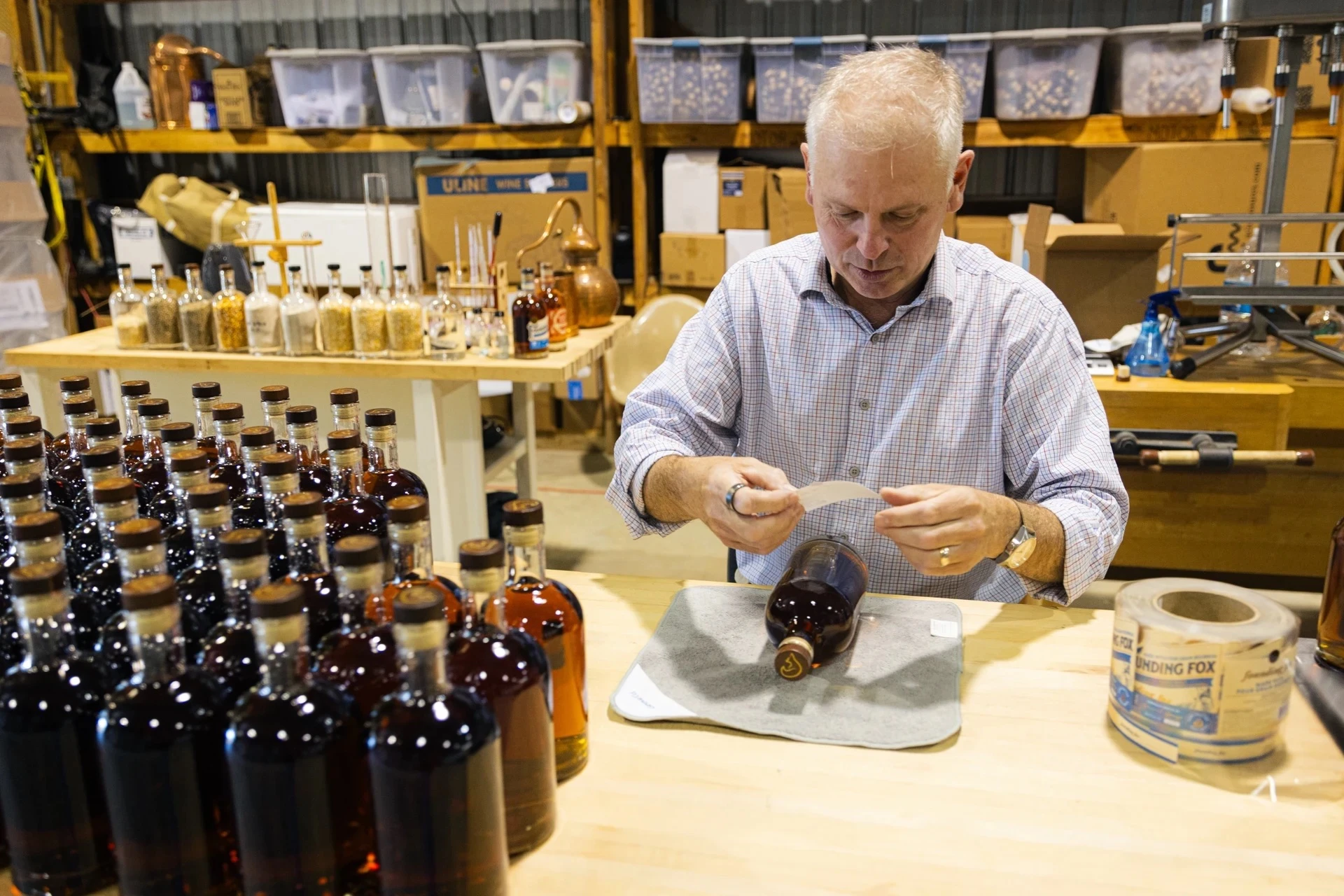
A distillery on Washington's old ground, raising again
The General George Stillhouse Distillery and Winery sits on a piece of Kentucky that George Washington once owned, in a town called Falls of Rough. The bourbon, gin, vodka, and wine made there are double-oaked in barrels built from local wood or in French oak that arrived used from California Cabernet producers. Since the doors opened to the public on May 10, more than 3,500 visitors have walked through. This spring, 49 of them put money into the distillery’s second Honeycomb Credit raise.
The business is small-batch by design. Local grains go in, single expressions come out, each finished in a barrel chosen for what it will do to the whiskey rather than for what is cheapest to fill. The main lineup is a bourbon, a gin, a vodka, and a wine, with two more bourbons in final taste testing — a high-rye double-oaked expression and a wheated bourbon, both close enough to the finishing stage that the distillery is already planning the barrel runs.
The distillery has had a useful year. It applied to join the Kentucky Bourbon Trail, passed the inspection, and was accepted — which sounds like a marketing line until you look at what it does to a tour-driven business in rural Kentucky. The Trail’s international marketing reaches travelers who plan their visits months in advance, and tour operators now route buses through Falls of Rough that wouldn’t have stopped there before. Reservations went up. Traffic went up. The distillery counted those 3,500 visitors against an opening that was less than a year old.
Kentucky also changed the rules in a way the business could use. A 2024 law lets craft distilleries self-distribute up to 5,000 gallons a year directly to retailers, restaurants, and hotels — no wholesaler in the middle. General George Stillhouse is already in 20 accounts and adding more each week, with a target of 50 by the end of summer. The online store sells steadily on top of that.
Why a second raise on Honeycomb
This was the distillery’s second Honeycomb campaign, not its first, which is the part of the story that says the most about how the mechanism worked the first time. A business that raises again on the same platform is a business whose first round of investors didn’t feel burned. The owners came back to the same audience because the audience was still there.
The structure is a fixed-rate, fixed-term community-funded loan. The distillery keeps its equity, the investors get paid back with interest over the life of the loan, and the capital comes from people who in many cases have been to the tasting room. For a distillery whose growth depends on visitors, on tour buses, and on bottles moving across 20 — soon 50 — Kentucky bar and restaurant accounts, having dozens of investors with a small financial reason to recommend the place is the kind of asset a bank loan does not come with.
$25,000, 49 investors, one month
The campaign opened on March 18, 2026 and closed on April 17 at $24,962 raised against a $25,000 goal — effectively at goal, past the funding minimum the loan needed to close, with 49 investors. For a $25,000 raise on a tight one-month window, that is a clean close.
The 49 number is worth sitting with. This is not a crowd of strangers in a spreadsheet. On a campaign this size, the investor list looks more like a guest book — Bourbon Trail visitors, locals who know the property, accounts who already pour the bourbon, and repeat backers from the first raise. The distillery’s job over the next several years is to pour for those 49 people, send them a bottle of the limited release when it’s ready, and keep the tasting room worth the drive to Falls of Rough. That is a workable list.
The funds are pointed at two specific projects, both of which already have demand attached. The first is aged barrel inventory for Bluefield Bourbon, a brand the distillery built in partnership with the City of Bluefield, West Virginia. Bluefield Bourbon had a limited online release in 2025 and sold out within hours on the General George Stillhouse store. Buying aged inventory now is what lets a follow-up release happen at all — bourbon that is ready to bottle this year was barreled years ago, and the only way to have more of it is to buy someone else’s.
The second project is the 250th-anniversary edition of Founding Fox Red, White, and Blue, a Kentucky Straight Bourbon Whiskey released to mark 250 years of American independence. Because the distillery sits on land once owned by Washington, the bottle is being sold two ways: pre-filled, or as an experience where visitors use a whiskey thief to draw the bourbon themselves, cap the bottle, label it, and sign it. The release blends aged bourbon from General George with bourbon from another Kentucky distillery, which is why the barrel inventory dollars matter — the blend depends on having enough aged stock in hand when bottling starts.
Both projects are revenue-side. The Bluefield brand has a buying audience and a city behind it. The Founding Fox release has the Bourbon Trail traffic walking through the door. The capital is going toward the inventory that turns those audiences into bottles sold this year, while the wheated and high-rye expressions keep moving toward their own finishing runs. The distillery on Washington’s old ground is, for now, mostly busy filling barrels.
Your turn
Could your business raise like this?
Honeycomb Credit helps small businesses raise capital from the people who already love them. If that sounds like a fit, we’ll walk you through whether your business qualifies.