Funded by their community · Falls of Rough, KY
How a Kentucky distillery on Washington's old land found 73 lenders
A small Falls of Rough stillhouse that paid down equipment debt with help from its drinkers
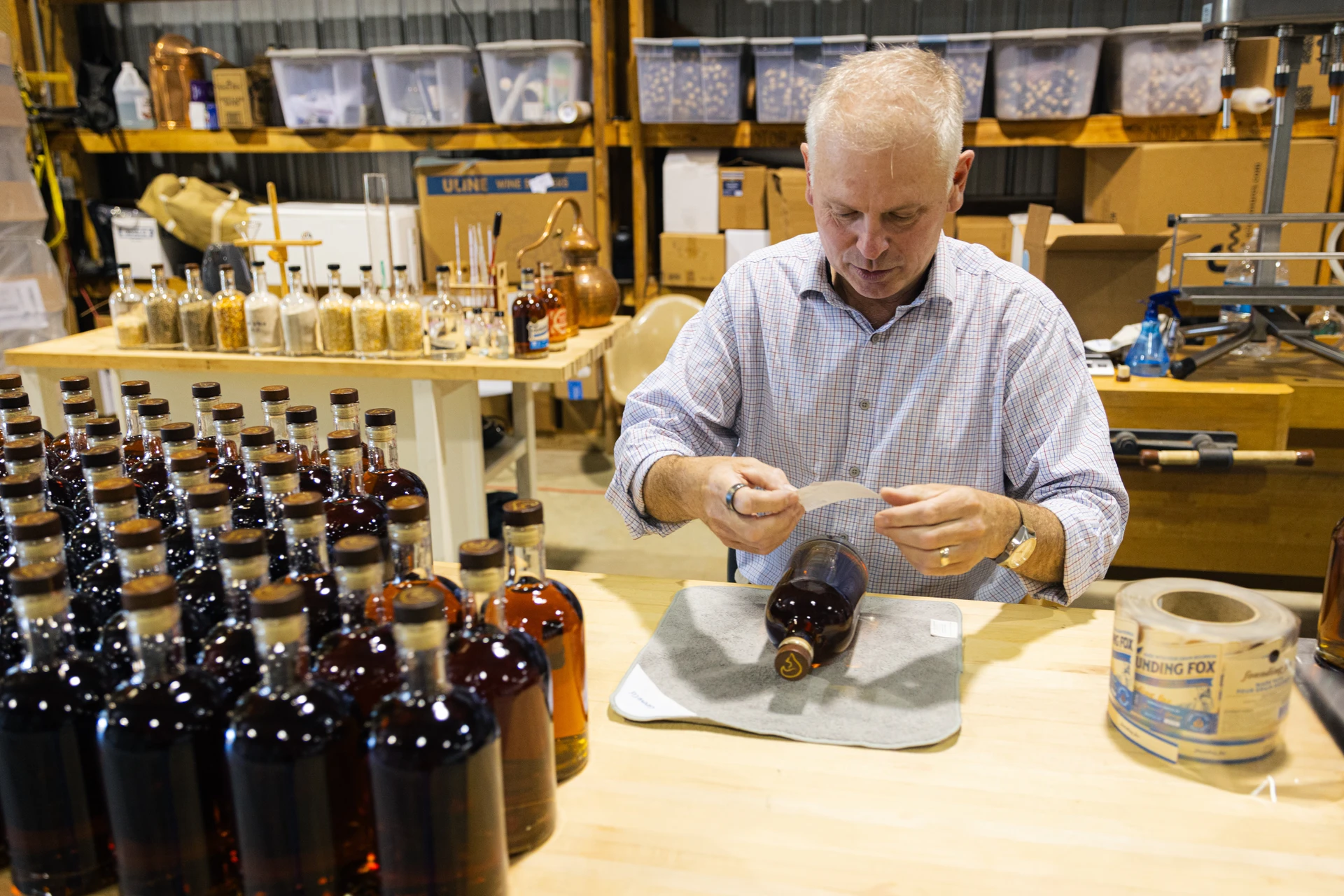
A stillhouse on Washington's land
The land at Falls of Rough sits along a stretch of the Rough River that George Washington once held title to. The General George Stillhouse runs a craft distillery on that ground, making bourbon, gin, and vodka in small batches a few hours’ drive from Louisville. The distillery opened in 2022. Three years in, the question on the table was a familiar one for a small producer: how to keep growing without letting the equipment loan eat the production budget.
General George Stillhouse is a craft distillery in Falls of Rough, Kentucky. The flagship is Founding Fox Bourbon, which has picked up awards since the distillery opened. Alongside the bourbon, the team makes a handcrafted gin and a vodka, all using native ingredients and the kind of time-honored process that Kentucky distilling is built on. The pitch to a visitor is the land itself — a working stillhouse on ground tied to the country’s founding, with the bottle in your hand made a few hundred feet from where you’re standing.
That kind of business runs on two things at once. There is the production side, where every dollar tied up in old equipment debt is a dollar that can’t go toward the next barrel, the next batch of botanicals, the next run of bottles. And there is the visitor side, where people drive out to Falls of Rough specifically to see a working distillery on historic land. Both sides were ready to grow. Neither could move while the books were carrying the kind of equipment debt a young distillery accumulates in its first three years.
A traditional bank loan to refinance equipment debt and build out a tasting-room restroom is the kind of ask that makes a commercial lender’s eyebrows go up. The collateral picture for a craft distillery is unusual — the most valuable thing on site is barrels of bourbon that won’t be sold for years. The revenue picture is real but young. The owner didn’t name a specific bank, but the structural mismatch between a three-year-old distillery and a conventional small-business loan is the kind of thing that doesn’t take much imagination to fill in.
Why a community-funded raise made sense
Honeycomb Credit lets a business raise capital from the people who already know it, as a fixed-rate, fixed-term community-funded loan. The distillery keeps its equity. The people who funded the raise get paid back with interest over the life of the loan. For a craft distillery, that mechanism has a particular fit. The customers are already the audience — people who have driven to Falls of Rough, taken the tour, tasted the bourbon, and bought a bottle to take home. Turning some of those visitors into lenders extends a relationship that was already there.
The alternative was the one most young distilleries land on: take on more equipment debt, or sell a piece of the company to outside capital. Neither option keeps the business whole the way a community-funded loan does.
The raise and what it covered
The campaign opened on May 28, 2025 and closed on June 27, 2025. It closed at $55,338 from 73 investors against a $75,000 ceiling — short of the goal, but past the funding minimum that lets a Honeycomb loan close. Seventy-three people committed to the distillery in a thirty-day window.
The shape of that group matters more than the headline number. Seventy-three lenders to a small Kentucky distillery is seventy-three households with a financial reason to bring a friend out to Falls of Rough next weekend, to ask their local bottle shop about Founding Fox, to mention the gin at a dinner party. The structure is the bet: a craft distillery’s hardest problem is getting in front of new drinkers, and seventy-three people who already drove to the stillhouse are now seventy-three people with a small stake in seeing the business grow. Whether that bet plays out is the next thirty-six months of the business.
The funds are going to two things. The first is the construction of new restroom facilities at the stillhouse. That sounds like a small line item in a press release, but for a distillery whose growth depends on visitors driving out to the property, the bathroom situation is a real constraint on how many people the team can welcome at once. The second is paying down equipment debt the distillery had been carrying since the early build-out. Retiring that debt frees up monthly cash that had been going to debt service, which is what lets the distillery put more capital into production — more barrels filled this year, more gin and vodka through the still, more bottles ready when the next visitor walks in.
The campaign didn’t fund to its $75,000 ceiling. The owner could have walked away when the number stalled below goal. The structure didn’t require that — past the funding minimum, the loan closes — and the seventy-three people who had already committed were enough to do the work the distillery needed done. The restrooms get built. The equipment loan gets paid down. The next pour at the Falls of Rough stillhouse is a little closer to the one the team has been working toward.
Your turn
Could your business raise like this?
Honeycomb Credit helps small businesses raise capital from the people who already love them. If that sounds like a fit, we’ll walk you through whether your business qualifies.