Funded by their community · Minneapolis, MN
How Grounded Earth bridged a Minnesota winter without giving up the company
An all-electric Minneapolis landscape company built recurring revenue, then needed cash to reach April
A seasonal business with a winter problem
In Minneapolis, the landscape business stops in November and does not start again until April. For five months, the mowers are quiet, the trucks are parked, and the crews are on hold. The bills are not. That gap — between the last invoice in late fall and the first in spring — is the structural problem every Minnesota landscape company has to solve. Grounded Earth solved it this year by raising $24,975 from 44 investors.
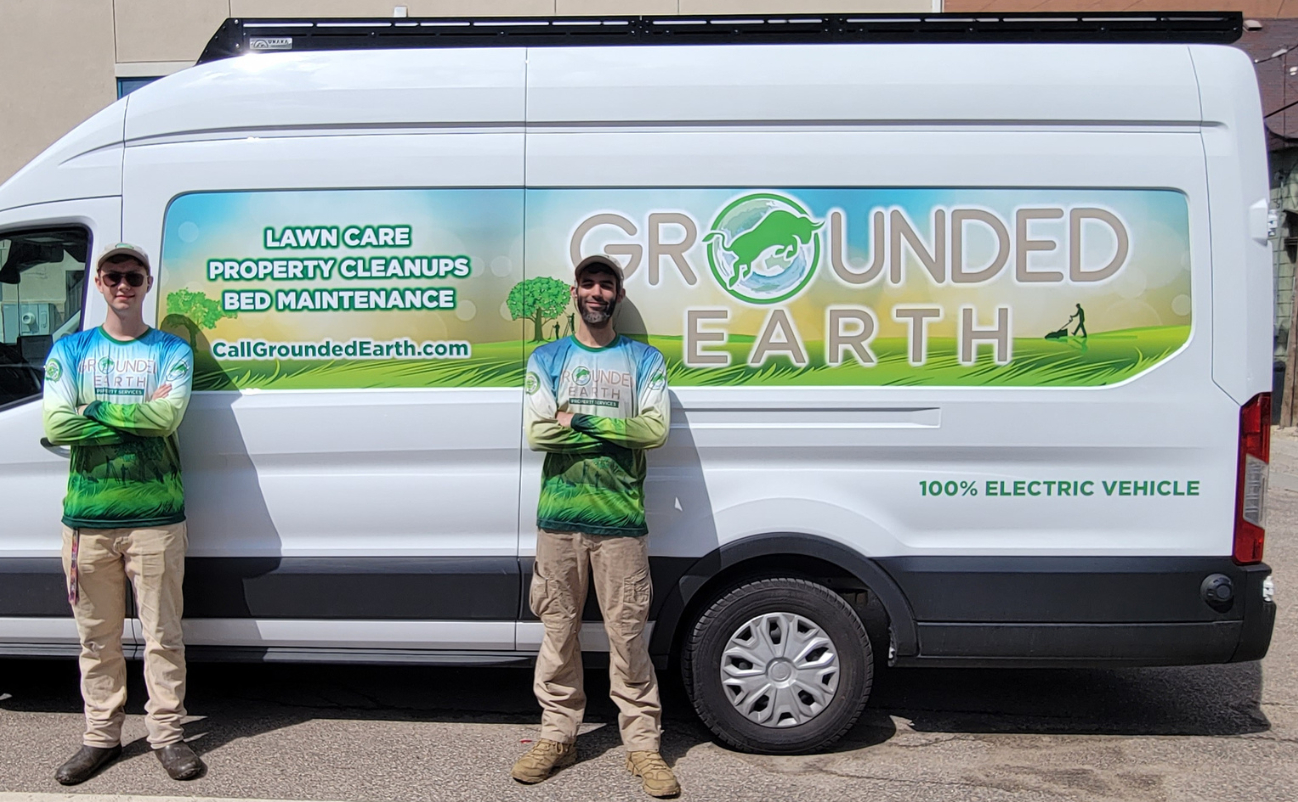
Grounded Earth is an all-electric ecological landscape management company that started in 2022 as an electric lawn care operation. Over the next four years, the owner moved the business away from one-off mowing jobs and toward what the industry calls Ecological Landscape Management — recurring residential service plans built around long-term landscape health rather than weekly cosmetic mowing. The company runs three divisions now: ecological maintenance, invasive plant management, and supporting lawn care programs that pull new clients into the recurring side of the book.
The whole field operation is electric. Battery mowers, battery handhelds, electric vehicles. No two-stroke noise, no gas cans in the truck bed, no fuel surcharges riding on every invoice. For a residential client paying for a recurring service, the difference shows up at 8 a.m. on a Tuesday — the crew is already in the yard and the neighbors do not know it yet.
The model worked. The recurring side of the book grew. The problem was the calendar.
Why a bank was not the answer
A traditional small-business loan was not the right fit for a four-year-old service company whose revenue arrives in a seven-month window. Banks underwriting working-capital lines want to see twelve months of evenly-distributed revenue. A Minnesota landscape company shows them seven good months and five flat ones, and the conversation gets harder than it should. The owner had been bridging the winter on short-term credit — the kind that is available, but expensive enough that every month of carry erodes the next season’s margin.
Equity was the other path, and the owner did not want it. Giving up a piece of a four-year-old company that was finally working as designed, in exchange for capital meant to cover five months of payroll and equipment readiness, is a permanent trade for a temporary problem. It would have changed the ownership structure of a company built deliberately, on purpose, with a specific operational discipline at its center.
The Honeycomb structure matched the actual shape of the need. A fixed-rate, fixed-term community-funded loan, sized to bridge one winter, repaid out of the recurring revenue that resumes in April. The capital comes in once. The repayment comes from the season the capital made possible. The cap table does not change.
Forty-four investors, a $25,000 ceiling
The campaign opened on March 17, 2026 and closed on April 16 — the same week the season started. Forty-four investors funded the raise. The total came in at $24,975 against a $25,000 ceiling, essentially fully subscribed.
The timing was the point. The raise was structured as bridge capital, not growth capital, and the close date sat almost exactly on the operating-season start. Funds in, season open, crews dispatched. There was no gap between the capital event and the work it was meant to support.
About 40 percent of the proceeds went to retiring higher-interest short-term debt the company had been carrying through the winter. That is not a glamorous use of capital, but it is the one that compounds. Every dollar of high-rate carry that comes off the balance sheet in March is a dollar of margin that stays in the business through the back half of the year. The remaining 60 percent stayed liquid as seasonal working capital — team onboarding, equipment readiness, the operational ramp-up that has to happen before the first April invoice goes out.
The 44 investors include the kind of people a Minneapolis ecological landscape company tends to attract: residential clients who already pay for the recurring service, neighbors who have watched the electric crews work without hearing them, and other local operators who recognize the discipline of running a seasonal business on a recurring-revenue model. They are not abstract investors. Several of them will see a Grounded Earth truck in their own neighborhood this summer.
The company entered the 2026 season with a cleaner balance sheet, a working capital reserve, and the same ownership structure it had in February. The crews started in April on the schedule the owner had planned for. The recurring contracts that were already on the books continued. The growth this year is the kind the business was built for — measured, mission-aligned, paid for out of revenue rather than out of a future equity stake.
The next winter is twelve months away. The goal between now and then is to keep building the working capital reserve so that the next bridge, if one is needed, is shorter than this one was.
Your turn
Could your business raise like this?
Honeycomb Credit helps small businesses raise capital from the people who already love them. If that sounds like a fit, we’ll walk you through whether your business qualifies.