Funded by their community · Townsend, DE
How 131 backers helped a Delaware lavender farm break ground on its first cottages
A first-generation farm in Townsend, building agritourism one acre at a time
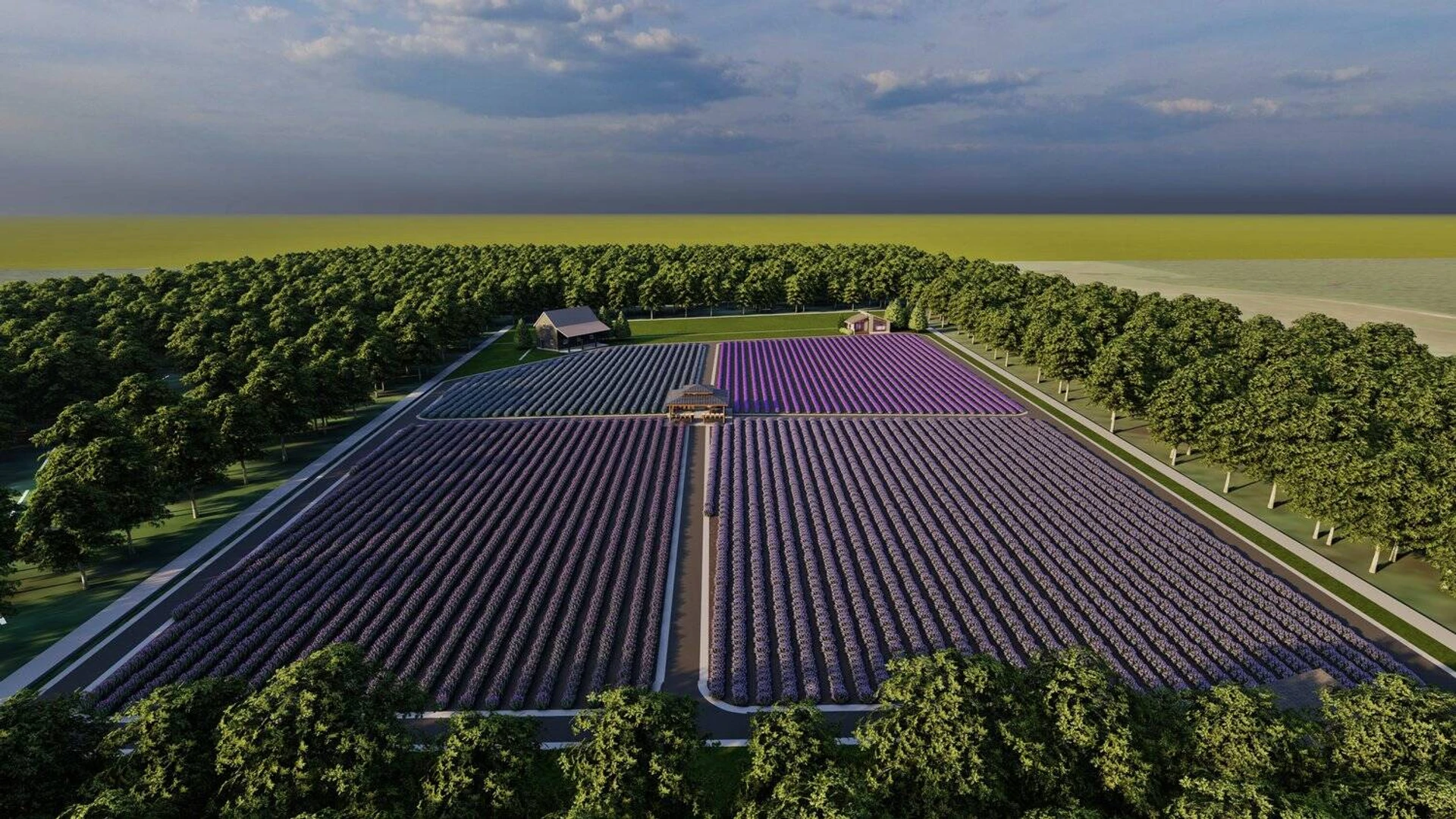
One acre of lavender on a 12.7-acre family bet
Harvey Haven Lavender Farm sits on 12.7 acres in Townsend, Delaware, with one acre planted in lavender and four more cleared and waiting. The Donato family — Will, Rosa, and their daughter Jessie Vidal, with siblings Marlene Ortiz and Alex Donato working the rows alongside them — has put more than $100,000 of its own money into the ground so far. The plants are in. The next question is what gets built around them.
The farm is a first-generation operation, which is its own kind of starting line. There is no inherited barn, no inherited equipment shed, no rental cottage already standing from a previous generation’s side business. Every structure on the property has to be planned, engineered, permitted, and paid for from scratch. The Donatos have built the agricultural side of the business themselves over the last several years: an acre of lavender in production, a line of handcrafted body care products and specialty beverages made from the harvest, and the early shape of an agritourism plan that runs in three phases.
Phase 1 is the smallest of the three and the one that unlocks everything after it. It is a utility barn to protect the equipment the farm already owns, and three cottages for overnight guests. The cottages are the revenue piece. The barn is the piece that lets the farm operate without watching tractors and harvesting gear sit out in Delaware winters.
The math on the cottages is the kind of math a small farm has to be honest about. The Donatos modeled a 43 percent occupancy rate in the first year and 62 percent after that, with nightly rates that move with the season but average $250 to start. Rates that conservative leave room for a first season that does not break records. They also mean the cottages can carry their own weight from year two forward, which is what the rest of the agritourism plan depends on.
Why a community raise, not a bank loan
The Donatos had already put six figures of personal capital into the farm before they came to Honeycomb Credit. A traditional construction loan against a first-generation farm with one acre in production and a multi-phase agritourism plan is not an easy underwrite. The land is real, the family’s investment is real, the projections are documented, and a commercial lender still sees a property that does not yet have the revenue history a loan officer wants on paper.
Honeycomb’s structure fit what the farm actually had: a small but real audience of people who already know what Harvey Haven is doing, and a project that pays back in season rather than on a loan-officer’s quarterly review. A community-funded raise let the family bring in capital for Phase 1 without giving up ownership of a business they have been building together for years.
$85,000 from 131 backers
The campaign opened on January 8, 2026 and closed on February 26 with $85,112 from 131 backers. The raise did not hit its $124,000 ceiling, which means Phase 1 gets built closer to its essentials than its full scope. The utility barn and the three cottages are still the plan. The design and engineering work the farm laid out at the start of the campaign is still the plan. What 131 backers funded is the version of Phase 1 that gets the cottages standing and ready for guests by spring rental season.
The 131 backers matter beyond the dollar figure. A cottage rental business depends on people who will book a weekend, tell other people, and come back. The investors are not a separate population from the guest list. They are the front edge of it. A farm that has 131 households with a small stake in the cottages being booked is a farm that opens its first rental season with a built-in audience.
The Donatos kept the lavender side of the business running through the campaign. The acre in production stayed in production. The body care line stayed on the shelf. The raise was the construction question, not the farm question.
What gets built first
The funds go toward Phase 1: design and engineering for the site, the utility barn for equipment, and the three cottages. The cottages are scheduled to open for rentals by April 2026, with nightly rates that vary from $200 to $500 depending on the season. The barn comes online alongside them so that the equipment the farm already runs has a place to live through the winter.
Phases 2 and 3 are still on the page — an event pavilion, a barn for weddings, more cottages, on-farm workshops. None of that gets built without Phase 1 standing first. The cottages have to open, the occupancy numbers have to hold, and the agritourism side of the business has to prove it can carry its share of the farm’s revenue. That is the work the 131 backers funded the first inning of.
The Donatos are aiming to have guests in the cottages by April. That is the first test the farm has set for itself, and it is the test the rest of the plan rides on.
Your turn
Could your business raise like this?
Honeycomb Credit helps small businesses raise capital from the people who already love them. If that sounds like a fit, we’ll walk you through whether your business qualifies.