Funded by their community · Rogers, AR
The Rogers jerky maker that wants its own USDA kitchen
Kicker's Saddle Jerky is buying back its margins, one production run at a time
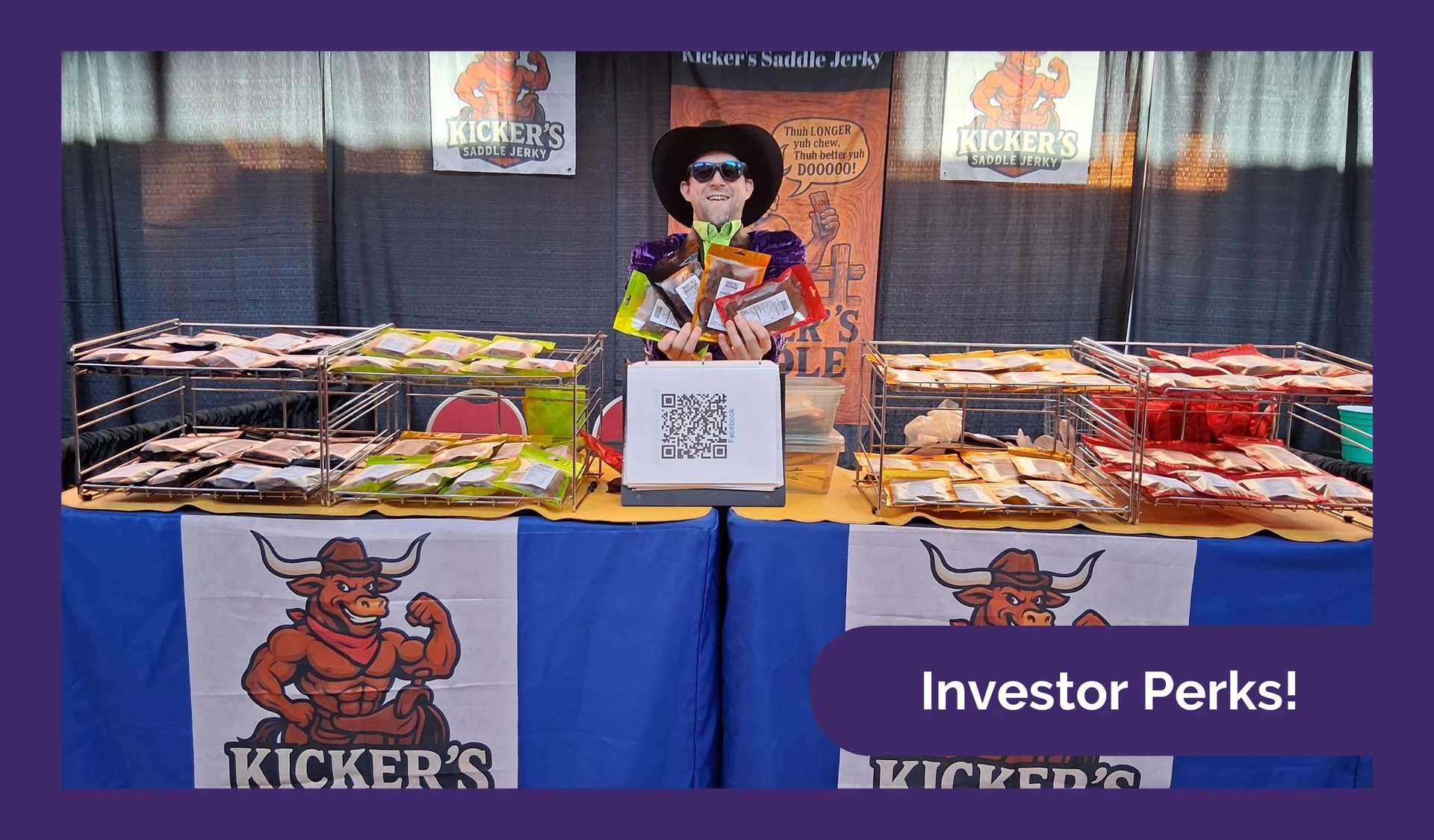
From co-packed pouches to a kitchen of its own
In Rogers, Arkansas, the people behind Kicker’s Saddle Jerky have spent the last stretch of the business doing what most early-stage food makers do: building a brand on someone else’s production line. The jerky has a name in the regional market. The kitchen it comes out of doesn’t belong to the company that sells it. That gap, between owning a brand and owning the means to make it, is what this raise is about.
Kicker’s Saddle Jerky is a small-batch beef jerky maker working in the space between artisanal and industrial. The product leans on what the company calls the heritage of the Natural State — Arkansas cattle country, smoke, salt, the older traditions of preserving beef — and pairs it with the kind of flavor profiles a gourmet shopper expects in 2026. High-protein, shelf-stable, the kind of pouch that ends up in a cooler at a trailhead or on the passenger seat of a long drive home.
The constraint the owner kept running into is the one most early-stage CPG founders know by heart. Co-packing a USDA-regulated meat product means buying production at someone else’s price, on someone else’s schedule, with raw materials sourced at someone else’s volume. Every pouch carries margin the maker never sees. Every growth conversation with a buyer ends with a question about capacity the maker cannot answer on their own.
A traditional bank loan for the kind of facility purchase Kicker’s wants — a USDA-inspected production kitchen, with the licensing and permits that go with it — is not the kind of credit a young CPG brand walks into easily. The books of a co-packed jerky business read like the books of a co-packed jerky business: real revenue, thin margins, inventory that moves but not on the schedule a lender models against. The owner didn’t name a specific bank in the campaign materials, but the structural mismatch is the kind any small food brand recognizes.
A raise that didn’t clear the goal
Kicker’s opened a Honeycomb campaign on January 20, 2026 with a $60,000 ceiling and closed it on March 5 at $15,211 from 17 investors. That is roughly a quarter of the original goal. The campaign closed below the funding minimum that would have let a Honeycomb loan close, which means the money raised was returned to investors and the facility purchase the raise was built around did not get funded on this round.
That outcome is part of why this case study exists. The reader of these pages is a small-business owner weighing community-funded debt against the other options, and the honest version of that decision includes the campaigns that don’t clear. Honeycomb raises are all-or-nothing above the funding minimum for a reason: a loan that doesn’t reach a workable size doesn’t serve the borrower either. Seventeen people said yes to Kicker’s in a six-week window. That is a real signal about the brand. It was not enough signal to close a $60,000 loan against a USDA facility purchase.
What the seventeen actually represent
Seventeen investors on a CPG campaign in a town the size of Rogers is a smaller number than the headline raises that get written up. It is also seventeen households that now have a financial reason to look for the pouches on the shelf, to recommend the brand to the buyer at the grocery store they shop at, to ask whether the local outdoor retailer carries it. That kind of advocacy is hard to buy and easy to underestimate, and it doesn’t disappear when a campaign closes short.
The structure is the bet a community raise makes: investors who already eat the jerky are now investors who already eat the jerky and have a small stake in seeing it on more shelves. Whether that bet plays out for Kicker’s over the next twelve months is the question the owner is now living with. The facility purchase is on hold. The brand is not.
What a vertical kitchen would have done
The use of proceeds the campaign laid out is worth reading on its own terms, because it is the clearest version of what a young CPG brand actually needs from capital. A USDA-inspected facility would let Kicker’s source raw beef in bulk at wholesale pricing instead of paying the markup baked into a co-packer’s pass-through. It would let the owner run production on the brand’s schedule, not in the slots a co-packer has open. It would let gross margins expand to something closer to what a vertically integrated jerky business looks like at scale.
None of that is theoretical. It is the standard playbook for a CPG brand moving from co-pack to in-house. The capital required to make the jump is real, and the credit available to make it is the part the playbook tends to skip past. A bank wants the facility already producing. A co-packer wants the brand to keep paying the markup. Honeycomb is one of the few structures that lets the customers of a brand vote on whether the jump is worth funding.
The Kicker’s raise didn’t get there this time. The product is still moving through the channels it was moving through before the campaign opened, and the owner is still working in Rogers, building the kind of brand that might be ready for the next attempt at the next conversation with the next pool of investors.
Your turn
Could your business raise like this?
Honeycomb Credit helps small businesses raise capital from the people who already love them. If that sounds like a fit, we’ll walk you through whether your business qualifies.