Funded by their community · Greensburg, PA
The Pickled Chef turned 92 jar-buying regulars into its winter cash flow
A Greensburg pickle maker raised $63,157 to buy equipment and pay off the credit cards that get the business through January
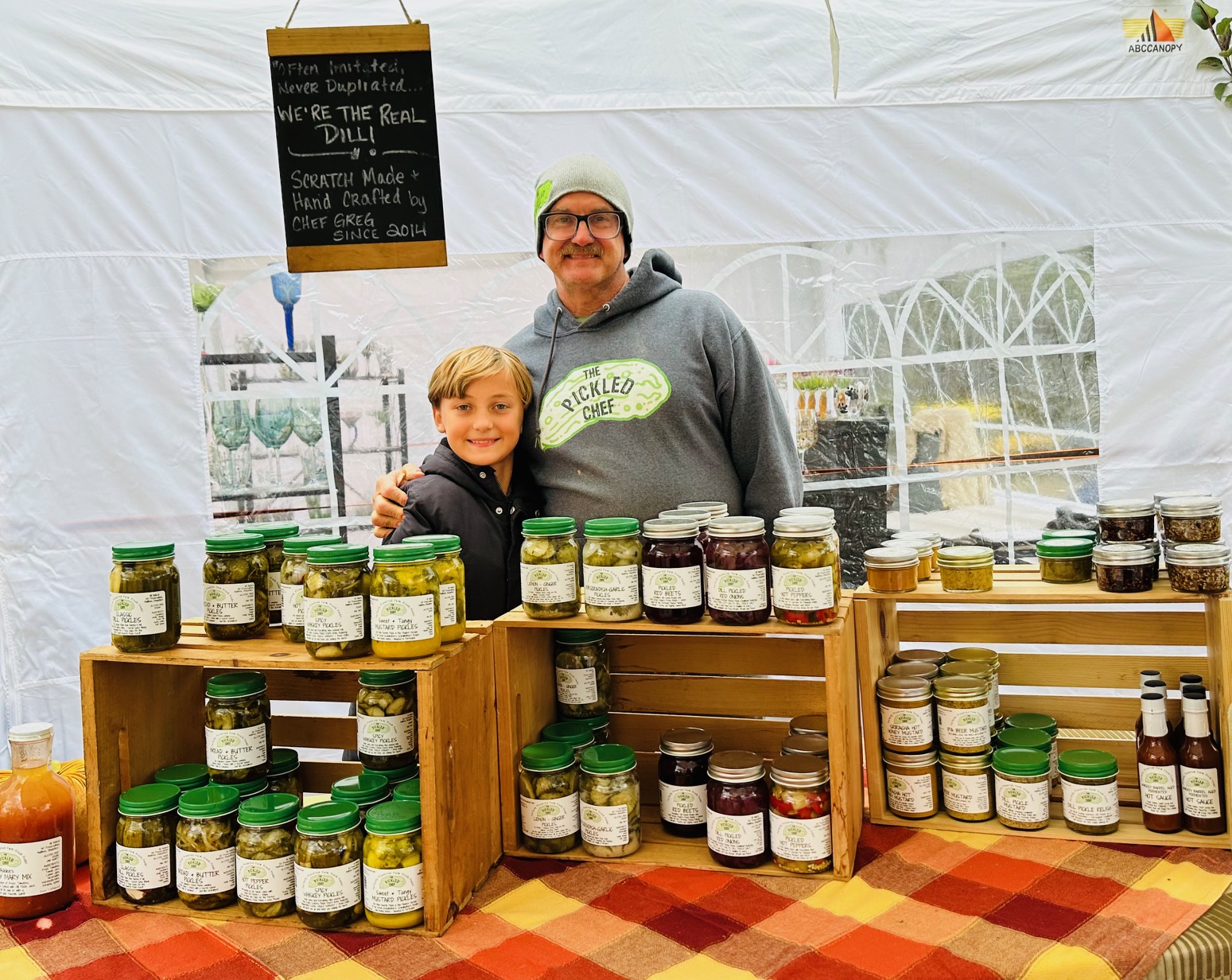
Four dozen products, one Greensburg kitchen, and a winter that always gets tight
Every February, The Pickled Chef has the same problem. The farmers’ markets are closed, the wholesale orders slow down, and Chef Greg Andrew is still running a kitchen that produces over four dozen products year-round. Credit cards cover the gap. They have for years.
The Pickled Chef is a family-owned small-batch food business based in Greensburg, Pennsylvania, about 35 miles east of Pittsburgh. Greg cooks the recipes himself. The kitchen turns out dill and bread-and-butter pickles, pickled red beets, fermented kimchi, flavored sauerkrauts, a Wigle Whiskey barrel-aged hot sauce, an apple maple bourbon jam, a Bloody Mary mix, and a line of fresh dressings the business added more recently. In 2024 the kitchen also started producing single-serve heat-sealed fresh pickle snacks. Every jar is hand packed.
The customer base is the part that makes the math work. Some are older shoppers who grew up canning with a parent or grandparent and recognize the labor in a small-batch jar the moment they pick one up. Others are younger buyers who care about where the food came from and who made it. Both groups buy at farmers’ markets across Western PA from spring through fall. Both groups disappear in January.
Production has been growing roughly 10 percent a year, which sounds like a comfortable problem until you look at the equipment doing the work. Some of it is older than the growth curve can support. More volume needs more refrigeration the kitchen doesn’t yet have. Replacement and upgrades are not optional purchases at this point; they are the cost of meeting next season’s farmers’ market demand without falling behind on wholesale.
Why a credit card was the wrong tool for a seasonal business
The other piece of the math is what happens between November and April. Cash flow tightens, the markets aren’t running, and the business has historically used credit cards to bridge the winter. High-interest credit cards are not built for that job. Every dollar of carried balance costs the kitchen the next dollar it earns in May.
A traditional bank loan would have been one way to refinance that debt and buy the equipment at the same time. The Pickled Chef didn’t pursue that path, and the structural reasons are easy to see from outside: a small-batch food business with seasonal revenue, hand-packed inventory, and a sales mix split across farmers’ markets and wholesale doesn’t read on a commercial loan officer’s spreadsheet the way it reads in person at a market booth. Greg also wasn’t looking to give up ownership of a business he and his family built around his own recipes.
Honeycomb Credit fit the shape of the business. A fixed-rate, fixed-term community-funded loan, repaid to the people who put the money in, with the ownership of the company staying where it already was. The investors would come from the same population that already knew the product. That was the bet.
Ninety-two investors, $63,157, and a campaign that closed in the off-season
The campaign opened on February 19, 2026 and closed on March 23 with $63,157 raised from 92 investors against a $75,000 ceiling. The raise closed past the funding minimum the loan needed to close, short of the goal but funded.
The timing is worth noting. February and March are the months The Pickled Chef has historically been carrying the most credit-card balance, with the markets still weeks away from opening. Running the raise during the lean window is what made the proceeds match the problem: the money arrived in time to pay down the cards before the spring buying season started, not after.
The investor list maps onto the customer list. These are 92 households in Western PA who already have a jar of bread-and-butter pickles in the refrigerator, or have picked up a Bloody Mary mix at a market booth, or know the apple maple bourbon jam by name. The structure is the bet: 92 people who already buy the product now have a small financial reason to mention it at a dinner party, ask a local grocer whether the kimchi is in stock, and bring a friend to the market booth in May. Whether that mechanism plays out the way the structure suggests is the next twelve months of the business.
The use of proceeds is split between two things the business needed at once. The first is equipment: replacing older pieces, adding production capacity to keep up with the 10 percent annual growth, and putting in the additional refrigeration the expanded volume requires. The second is paying down the high-interest credit cards that have covered every winter to date. Both line items address the same underlying problem, which is that a seasonal small-batch food business needs working capital priced for a seasonal small-batch food business, not for a revolving consumer card.
The kitchen is the part that doesn’t change. Greg is still cooking the recipes. The jars are still hand packed. The booth at the farmers’ market opens again in a few weeks.
Your turn
Could your business raise like this?
Honeycomb Credit helps small businesses raise capital from the people who already love them. If that sounds like a fit, we’ll walk you through whether your business qualifies.