Funded by their community · New Kensington, PA
How The Saucy African turned 67 customers into the lenders who believed first
A West African simmer sauce maker found capital where the banks wouldn't look — at her own dinner table
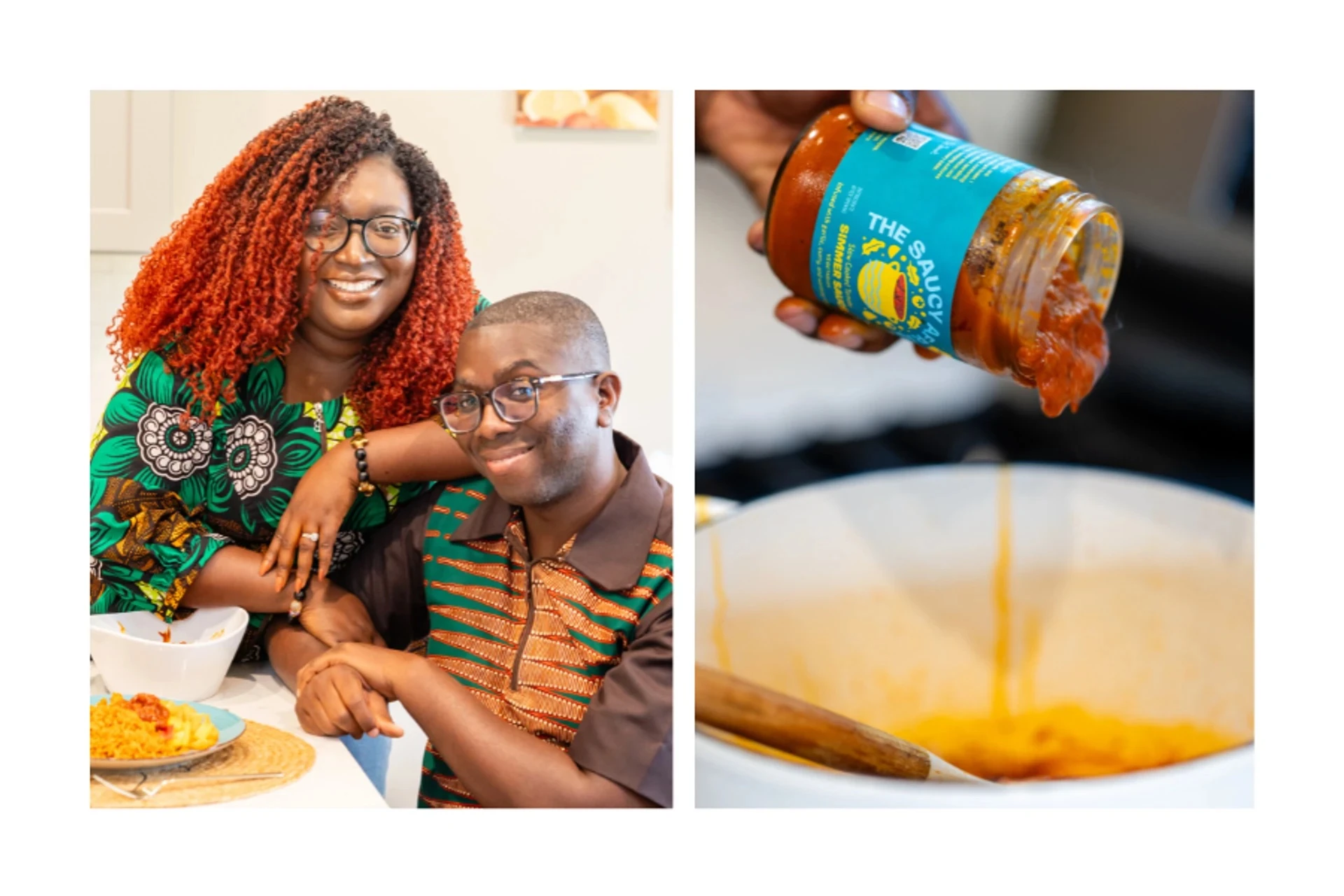
From a home kitchen to grocery shelves
If you make something people love and the bank still won’t lend on it, you already know the shape of Yetunde’s problem. She runs The Saucy African, a New Kensington, Pennsylvania maker of slow-cooked simmer sauces and spice blends rooted in West African cooking. The product is the kind of thing that sells itself in person — pour it over chicken thighs already in the pan, and dinner is mostly done — and that has carried the business onto retail shelves. What it had not carried the business through was a bank underwriter.
The Saucy African sells simmer sauces and spice blends built around West African culinary traditions, designed for home cooks who want to use them on weeknights without a research project attached. The sauces go on pasta. They go on rice. They go on whatever is already on the stove. The pitch the business has made from the beginning is that African flavors belong in the same everyday pantry rotation that Italian and Mexican flavors already occupy in most American kitchens — not as a specialty category, but as a Tuesday-night option.
By the end of 2025, the business had retail accounts, repeat customers, and the operational problems that come with both. Existing debt was eating into the monthly cash the business needed for inventory. New retail accounts wanted onboarding fees and sample shipments before the first PO landed. The owner didn’t name the rate on the existing debt in her campaign materials, but the shape of the squeeze was clear: every dollar going to debt service was a dollar not going to the next case of jars.
A traditional small-business loan was not the right fit for a young CPG brand whose books read like a young CPG brand’s books — strong velocity at demos, retail accounts still ramping, the kind of revenue profile that doesn’t underwrite cleanly. The owner didn’t want to give up equity either. Trading a permanent piece of the company for one round of working capital is a bad swap when the company is the asset you’ve spent years building.
A loan from the people who already cook with the sauce
Honeycomb Credit’s structure matched the shape of the business. A fixed-rate, fixed-term community-funded loan let The Saucy African raise working capital from the people who already buy the sauce, without giving up equity and without waiting on a bank that wasn’t going to say yes anyway. The investors get repaid with interest over the life of the loan. The owner keeps the company.
The campaign also matched how a CPG brand actually grows. People who try the sauce and like it tend to tell other people. Some of those people end up at a tasting demo. Turning that same audience into investors meant the people most likely to advocate for the brand now had a small financial reason to do it on purpose.
Sixty-seven investors, and a number that needs explaining
The campaign closed on January 29, 2026 with $46,841 raised from 67 investors against a $50,000 goal.
The raise closed short of the $50,000 ceiling, but past the funding minimum that lets a Honeycomb loan close. That’s the number worth understanding if you’re reading this and weighing your own raise. Reg CF campaigns are all-or-nothing above the funding minimum the issuer sets at filing — clear that floor and the loan closes and the funds release; miss it and the money goes back to investors. The Saucy African cleared it.
Sixty-seven investors is the more interesting number. For a CPG brand at this stage, that’s a meaningful base of people who already cook with the sauce and now have a direct stake in seeing the brand reach more shelves. The structure is the bet: 67 households with a small financial reason to ask their local grocer to stock the line, to bring a friend to the next demo, to notice whether the sauce is where they expect to find it. Whether that bet plays out is the next twelve months of the business — but it’s the kind of advocacy that’s hard to buy and easy to underestimate.
What the money is doing
The capital is going first to debt consolidation. Lowering the monthly cash burden is what lets the business say yes to a new chain account instead of pacing rollouts one store at a time. The rest is going to inventory for new and existing retail accounts, the onboarding fees and sample shipments and in-store demos that retail expansion actually costs, and a layer of operational support — part-time help, software, dedicated storage — that the owner had been doing herself.
The work now is the work that was already underway: more accounts, more demos, more shelves where someone can pick up a jar on a Tuesday and figure out dinner. The 67 investors who made the next stretch of that work possible are the same people the business was already cooking for.
Your turn
Could your business raise like this?
Honeycomb Credit helps small businesses raise capital from the people who already love them. If that sounds like a fit, we’ll walk you through whether your business qualifies.