Funded by their community · Pittsburgh, PA
How a former pro soccer player built sensor cones for the athletes the wearables market forgot
Sensi Fit raised $57,587 from 48 investors to keep cones on the field and inventory on the shelf
From a pro soccer career to a cone with a sensor inside
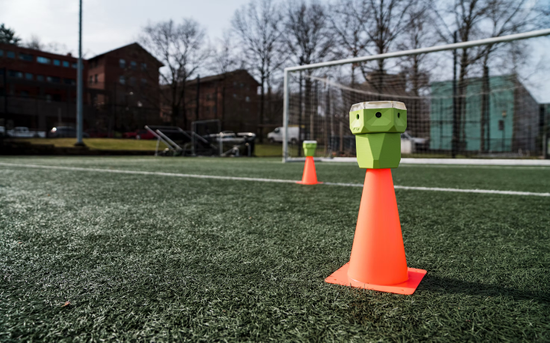
Izzy Hunter played professional soccer before she started designing cones. The cones look like the orange plastic ones at every practice in America, but each one has a sensor inside it. Set them up on a field in Pittsburgh, run a drill between them, and the system tells you how fast the athlete moved, where they decelerated, and whether the second rep was slower than the first. No watch on the wrist, no chest strap, no app the athlete has to remember to open.
Sensi Fit is a sports technology company in Pittsburgh, and the cone is its first product. The pitch is narrower than most sports tech: the people who already use cones are coaches, and the people Izzy built this for are the coaches who do not have a sports scientist on staff. A high school track coach with a stopwatch. A club soccer director running tryouts in a public park. A women’s college program with a fraction of the budget the men’s program has down the hall. The wearables market has spent a decade selling to the top of the pyramid. Sensi is built for the rest of it.
The decision to build for that customer is not incidental to who Izzy is. Women’s sports and youth sports are the two parts of the athletic world most often described as underserved, and they are described that way because the tools that exist were not priced or designed for them. A coach who cannot afford a $400 wearable per athlete, times a roster of 25, is a coach who measures sprints with a stopwatch and writes the times on a clipboard. Sensi’s cones replace the clipboard at a price point a school athletic budget can absorb.
Why a Honeycomb raise instead of a venture round
Most Pittsburgh hardware startups at Sensi’s stage raise from regional venture funds or angel groups. Sensi went a different direction. A venture round at this stage would have meant giving up a meaningful slice of the company before the product was even at full scale, on terms set by people who do not coach youth soccer and do not know what a $400 wearable feels like to a public school athletic director. Izzy wanted to keep the company pointed at the customer it was built for, which meant keeping the cap table close.
A Honeycomb raise is a fixed-rate, fixed-term community-funded loan. The capital comes from people who back the business; the equity stays with the founder. For a company whose advantage is knowing its customer better than the wearables incumbents do, that distinction matters. A board seat from a fund focused on enterprise sports tech would pull the roadmap toward pro teams. Forty-eight investors who liked the cone do not pull the roadmap anywhere.
What 48 investors funded
Sensi’s campaign closed on April 24, 2025 with $57,587 raised from 48 investors. The campaign targeted $124,000, and the close came in at roughly forty-six percent of that ceiling. The use-of-proceeds plan Izzy laid out covered six categories: hardware inventory to fill pending orders the company could not fulfill while out of stock, travel for 50 demos planned from Pennsylvania to California, an expanded summer internship program, an additional engineer to push the app features, a manufacturing transition off 3D-printed sensor housings, and the move from provisional to full patents.
At the amount raised, the priority is the inventory and the demos. Inventory was the bottleneck the campaign described most directly: orders existed, units did not. Backfilling that gap turns pending sales into shipped cases and turns shipped cases into the next round of coaches who saw the product at a demo and asked their athletic director about it. The 50 demos on the calendar are how a hardware product like this actually grows. A coach watches a sprint get measured by a cone, sees the number on the screen, and emails three other coaches that week.
The 48 investors are a smaller list than the cone deserves and a more useful list than the number suggests. Most are people who either coach, have a kid who plays, or know the gap Sensi is built to close. A campaign at this size does not get backed by people skimming a pitch deck. It gets backed by people who read the use of proceeds carefully and decided the inventory line and the demos line were the right places for their money to go.
The patent work and the manufacturing transition are slower-moving items. Provisional patents protect the idea for a year; full patents protect it for twenty. Moving sensor housing production off 3D printing and into a real manufacturing process is what lets the company go from making cones one at a time to making them in batches. Both items were on the original plan and both still matter. They wait their turn behind the inventory.
Izzy’s near-term work is the 50 demos and the cases they unlock. The cone is on the field at high schools and clubs that did not have a way to measure what their athletes were doing before. The coaches who saw it and ordered it are waiting for the inventory the raise just funded. That is the loop the company is now running.
Your turn
Could your business raise like this?
Honeycomb Credit helps small businesses raise capital from the people who already love them. If that sounds like a fit, we’ll walk you through whether your business qualifies.