Funded by their community · Berwyn, PA
How 55 neighbors helped a Berwyn pasta shop hit its goal
A specialty grocery and restaurant betting on gluten-free pasta in suburban Philadelphia
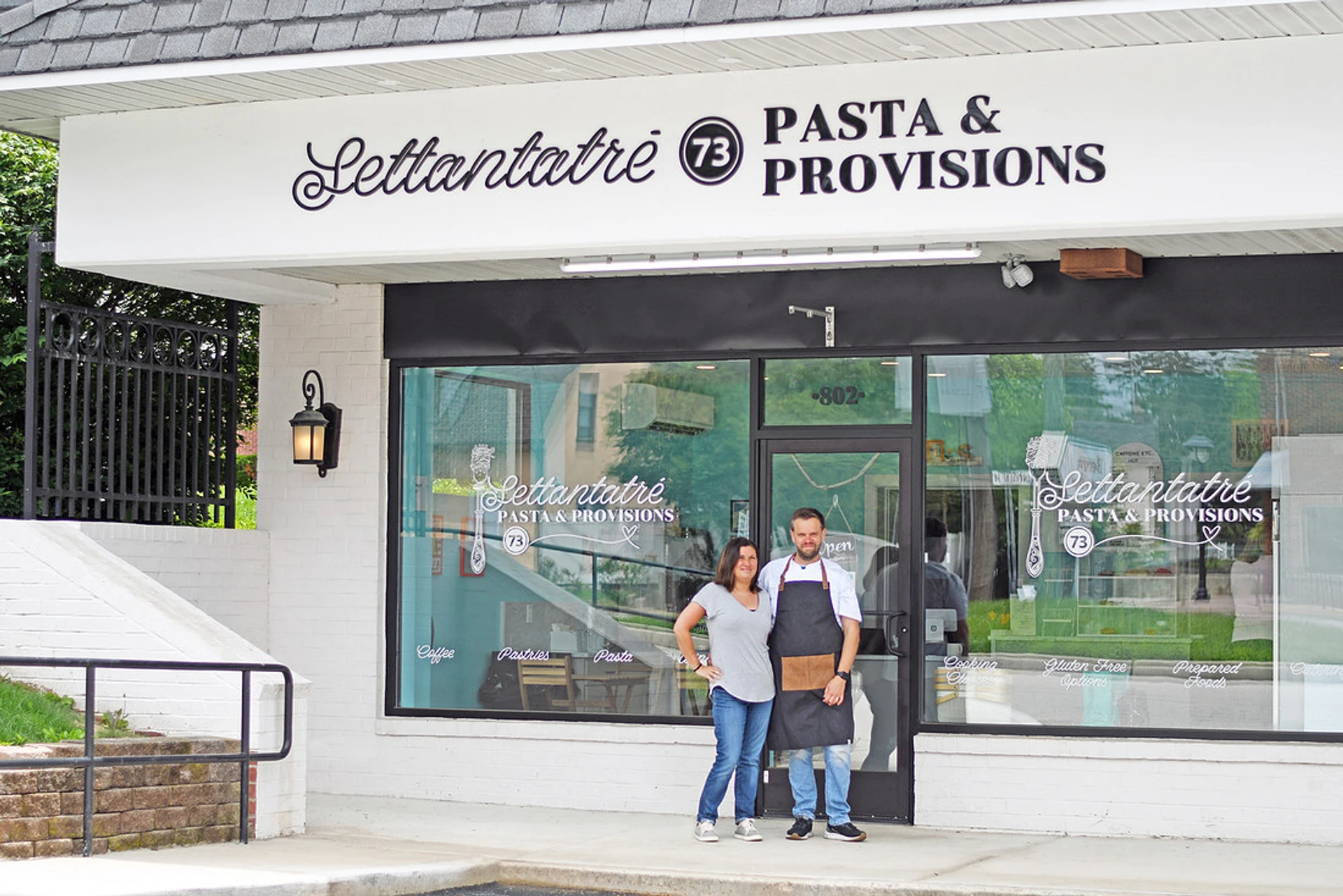
A pasta shop, a restaurant, and a classroom under one roof
Settantatré Pasta & Provisions doesn’t fit neatly into one box. Walk in on a Tuesday and you might find someone picking up house-made ravioli for dinner. Walk in on a Saturday and the same room is a classroom, with students rolling dough at the counter. The business is a specialty grocer in the morning, a full-service restaurant by evening, and a cooking school on weekends — and the business it most needs to scale right now is the gluten-free pasta line that has become its quiet specialty.
Settantatré (the name is Italian for seventy-three) operates out of Berwyn, Pennsylvania, on the Main Line west of Philadelphia. The shop makes handmade pasta in-house, sells house-made sauces and prepared foods alongside it, and runs cooking classes in the same space. The unusual thing about the operation is the gluten-free program. Most pasta shops treat gluten-free as a side menu — a couple of SKUs run on the same equipment, the cross-contamination risk acknowledged in fine print. Settantatré has built its gluten-free output into a real category, and the demand has come back in the form of wholesale interest the kitchen cannot currently meet.
That is the bottleneck the raise is built to solve. The shop has been making gluten-free ravioli by hand, which limits how much can come out of the kitchen in a day and keeps the unit cost high enough that wholesale margins are tight. A dedicated gluten-free ravioli machine changes that math. So does the staffing capacity to run lunch and dinner service at the hours customers keep asking for.
Why a Honeycomb raise instead of a bank loan
A multi-concept food business with three revenue streams under one roof is exactly the kind of operation that is hard to underwrite at a bank. The books don’t read like a restaurant’s books or a grocer’s books or a cooking school’s books — they read like all three blended together, which makes a commercial lender’s standard model unhelpful. The owner didn’t name a specific bank in the campaign materials, but the structural mismatch is the kind that pushes small food businesses toward platforms like Honeycomb in the first place.
The alternative the business chose against is the one most worth naming for any reader weighing the same decision. Equity would have meant permanently trading a piece of a business the owner has spent years building into its current shape. A merchant cash advance would have eaten into the daily till at exactly the moment the kitchen needs cash to expand production. A fixed-rate, fixed-term community-funded loan was the structure that fit — capital that gets repaid on a schedule the business can plan around, from people who already eat there.
Fifty-five investors, right at the line
The campaign opened on February 4, 2026 and closed on March 6 at $64,999 against a $65,000 goal. Fifty-five investors funded the raise.
That is one dollar short of the ceiling, which is worth pausing on. Reg CF campaigns close once they pass the funding minimum the loan needs to clear, and Settantatré’s did that comfortably. The 55 investors who participated are mostly the kind a small Main Line food business attracts — customers who already shop there, students from the cooking classes, neighbors who walk past the storefront on the way home. A campaign this size on Honeycomb usually skews local, and the investor list reflects that.
What that means for the business going forward is the part the reader of this case study should hold onto. Fifty-five households on the Main Line now have a small financial reason to bring a friend to dinner, sign a partner up for a class, or mention the gluten-free pasta to the celiac coworker who has been looking for a real option. That kind of advocacy is hard to buy. It is also the structural advantage of community-funded debt that a bank loan does not come with.
Whether that advantage plays out the way the model predicts is the next twelve months of the business.
What the money does
The capital from the raise goes to two places. The first is the gluten-free ravioli machine, which lets the kitchen produce at a unit cost that makes wholesale a real line of business instead of a side project. The second is staffing — enough additional hours to run lunch and dinner service at the cadence customers have been asking for, rather than the abbreviated schedule a small team can sustain alone.
Neither of these is a flashy use of proceeds. They are the operational moves a small food business has to make in order to take the next step from neighborhood favorite to regional supplier, and they are the kind of moves a bank loan would not have priced sensibly. The pasta shop on the Main Line that runs cooking classes on the weekend now has the equipment and the hours to find out what its gluten-free line can become.
Your turn
Could your business raise like this?
Honeycomb Credit helps small businesses raise capital from the people who already love them. If that sounds like a fit, we’ll walk you through whether your business qualifies.