Funded by their community · Coupland, TX
Why a Texas aeroponic farm needed 79 neighbors to clear a tax lien
A Coupland greenhouse caught between a 20-year vision and an antiquated tax code
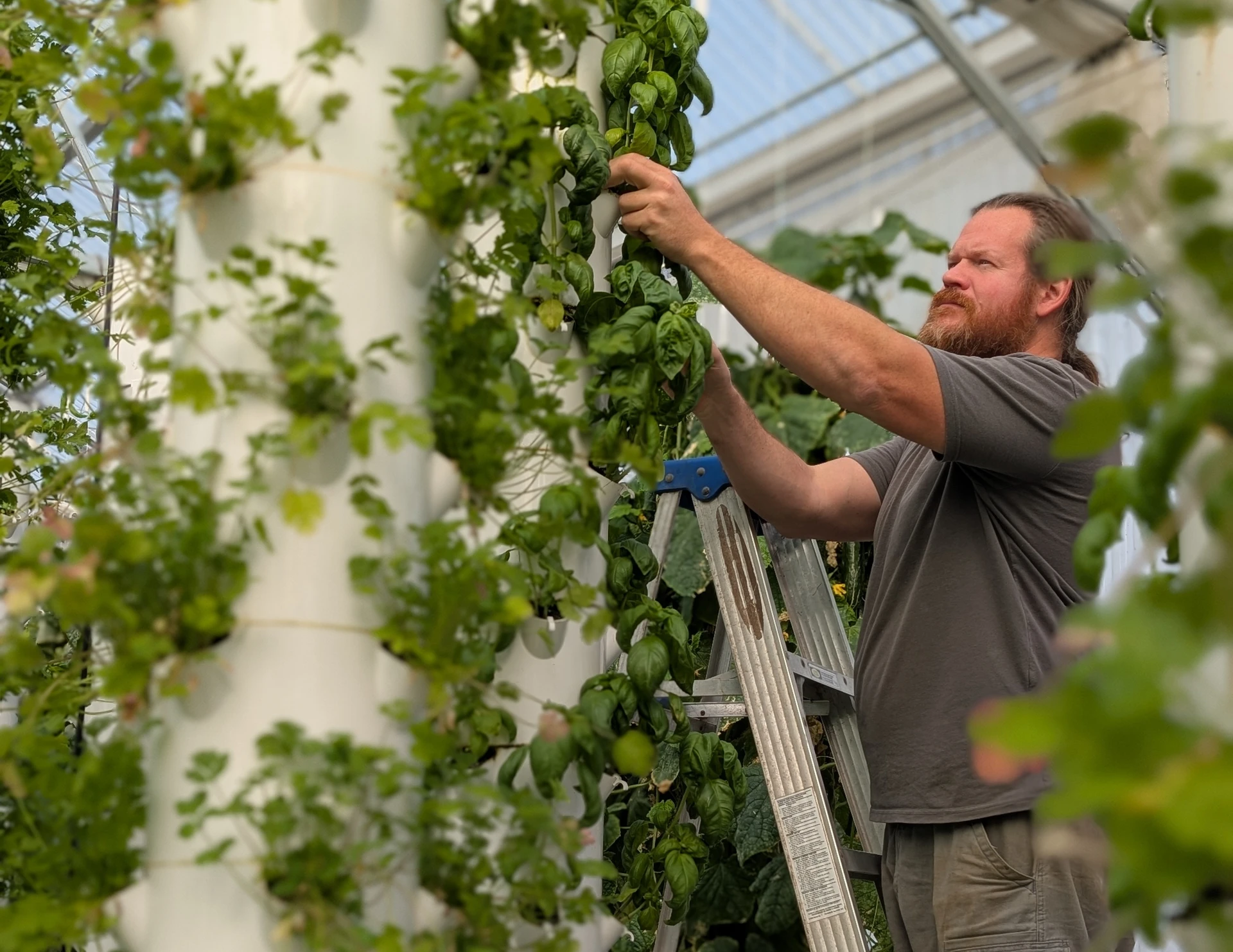
A greenhouse the tax assessor didn't have a category for
William and Danielle Texada have spent the better part of two decades working toward a single greenhouse in Coupland, Texas. The building is the kind of thing the local tax assessor has no clear box for: an environmentally controlled facility growing aeroponic greens with their roots still attached, harvested year-round, sold into Austin grocers and restaurants that want produce with shelf life measured in weeks instead of days. It is a working farm. The Williamson County tax code, as written, does not quite agree.
Vermillion Farms is what the founders call a ‘Beyond Organic’ operation. The greens grow vertically in nutrient-misted air rather than in tilled soil, which is the technology that lets the farm deliver hyper-nutritious living produce to the Austin community 365 days a year. The same technology is what disqualified the property from its agricultural tax exemption in 2024. Texas agricultural law was written for row crops and grazing land. A greenhouse that grows lettuce on vertical towers does not fit the template, even when its output per acre runs circles around the row crops the law was built to protect.
The exemption was revoked. The property tax bill that followed was the kind of number a young farm cannot absorb out of operating cash flow. To keep the land and keep the lights on, William and Danielle took out a high-interest emergency loan to cover the taxes. That loan put a lien on the property.
Then the second problem arrived. Vermillion had been working through a USDA Beginning Farmer loan, the federal program designed to get new agricultural operations onto stable footing. The program has strict rules about what can sit on the title of the land it underwrites, and a tax lien is one of the things that cannot. If the lien stayed, the USDA loan was at risk of foreclosure. The farm that the tax code couldn’t categorize was now caught between an emergency loan it had to take and a federal program it could no longer satisfy.
Why a bank loan wasn’t going to fix this
The fix on paper is straightforward: consolidate the high-interest emergency debt, clear the lien, satisfy the USDA, keep the farm. The fix in practice is harder, because a conventional commercial lender looking at Vermillion’s file sees a young aeroponic farm, a recently revoked tax exemption, an active lien, and a federal loan in jeopardy. The same regulatory mismatch that created the problem made the problem hard to refinance through normal channels.
What Vermillion did have was a customer base in Austin that already knew the produce, plus a story that other small farmers and food-system advocates recognized immediately. The aeroponic-versus-soil tax fight is not unique to Williamson County. It is a policy gap that small high-tech farms across the country are running into as they scale, and the Texadas have spent the last two years advocating for the law to catch up.
A Honeycomb raise fit the situation in a way a bank loan could not. It let the farm refinance the emergency debt with capital from the people who already understood why the operation matters: customers who buy the lettuce, neighbors who have watched the greenhouse get built, and other operators in the regional food system who have a stake in seeing this kind of policy fight resolved. The structure is a fixed-rate, fixed-term community-funded loan. The land stays with William and Danielle, the equity stays with William and Danielle, and the lien comes off the title.
Seventy-nine investors, one month, exactly the goal
The campaign opened on February 24, 2026 and closed on March 26 with $74,999.67 raised from 79 investors against a $75,000 goal. Reaching the ceiling on a raise built around a regulatory crisis rather than a product launch is its own kind of signal. The 79 investors were not buying a story about expansion or a new product line. They were buying time for a working farm to outlast a tax code.
The capital is doing three things at once. It consolidates the high-interest emergency debt William and Danielle took on in 2024 to cover the property taxes. It clears the resulting lien from the title, which brings the USDA Beginning Farmer loan back into compliance and removes the foreclosure risk. And it keeps the flagship Coupland greenhouse operational while the founders continue advocating for modernized agricultural tax law in Texas, the policy work that would prevent the next aeroponic farm from landing in the same place.
The 2026 expansion plan William and Danielle have been working toward for years is back on the table now that the lien is coming off. The greenhouse keeps running, the root-attached greens keep going out to Austin every week, and the 20-year project the Texadas started gets to continue being a working proof of concept while the law slowly catches up to what it is.
Your turn
Could your business raise like this?
Honeycomb Credit helps small businesses raise capital from the people who already love them. If that sounds like a fit, we’ll walk you through whether your business qualifies.